
Educating the Next Generation: Teaching Children About the Importance of Bees
Passing on More Than a Hobby
For Australia’s beekeeping community, the future of the industry depends on more than healthy colonies and productive seasons. It depends on the next generation understanding the value of bees and the vital role they play in agriculture, biodiversity, and food security. Whether managing a handful of hives or running a commercial operation, experienced beekeepers have an opportunity to inspire young people and ensure that the knowledge, skills, and passion for apiculture continue for decades to come.
Today’s children are tomorrow’s beekeepers, farmers, researchers, and environmental leaders. By introducing them to the fascinating world of bees, we not only build appreciation for pollinators but also encourage greater environmental awareness and a deeper understanding of the natural world.
Helping Children Understand the Bigger Picture
Many children associate bees simply with honey or the occasional sting. As beekeepers, we know their importance extends far beyond either.
Explaining how bees pollinate crops and native plants helps children understand the connection between healthy bee populations and the food they eat every day. Australia produces a wide range of fruits, vegetables, nuts and seeds that rely, either directly or indirectly, on insect pollination. Helping young people make these connections builds respect for bees and highlights the importance of protecting pollinators.
It’s also an opportunity to introduce Australia’s unique native bees alongside the European honey bee, demonstrating the diversity of our pollinator species and the important role each plays in our ecosystems.
Creating Safe, Memorable Experiences
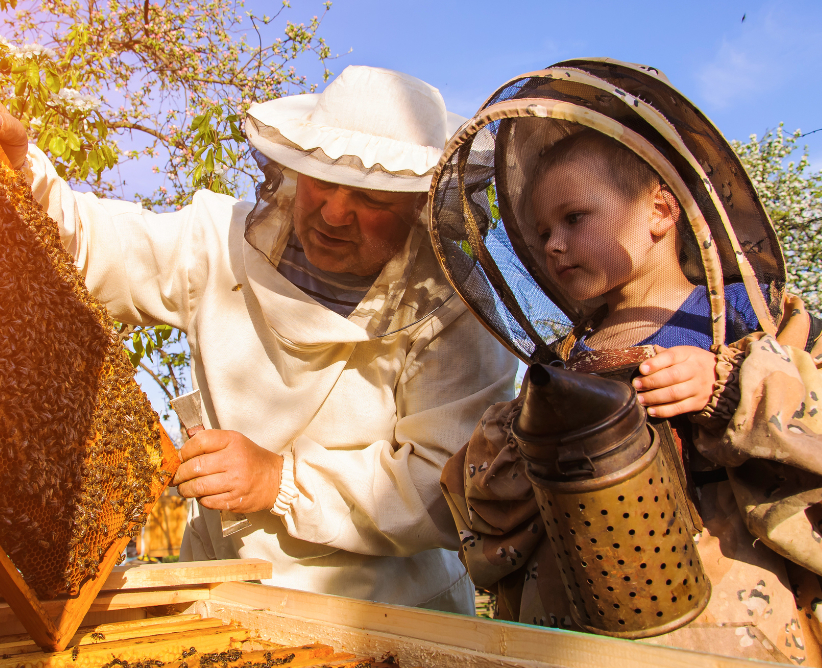
Nothing captures a child’s imagination quite like seeing a working hive for the first time.
Of course, safety must always come first. Observation hives, appropriate protective clothing, and supervised apiary visits allow children to experience beekeeping in a controlled environment. Many commercial beekeepers already support school visits, agricultural shows, field days, and community events where children can see bees at work without unnecessary risk.
Even simple activities such as examining frames, identifying different members of the colony, or tasting honey from different floral sources can leave lasting impressions.
Sharing Practical Knowledge
Children are naturally curious, making them eager learners when introduced to beekeeping.
Explaining the roles of the queen, workers and drones provides an engaging lesson in teamwork and cooperation. Demonstrating how hives are inspected, how honey is harvested, and why good hive management matters gives young people a realistic appreciation of the work involved in responsible beekeeping.
For older students, discussions can extend to biosecurity, seasonal management, nutrition, pollination services, and current challenges facing Australian beekeepers, including Varroa mite management and changing climatic conditions.
Building Future Stewards of the Industry
Not every child who visits an apiary will become a beekeeper, but every positive experience helps build public understanding of the industry.
As urbanisation continues to distance many Australians from agriculture, community education becomes increasingly valuable. Young people who understand the importance of bees are more likely to support pollinator-friendly gardening, appreciate local honey producers, and advocate for sustainable farming practices later in life.
Some may even pursue careers in agriculture, environmental science, horticulture, research, or commercial beekeeping, strengthening industries that rely heavily on healthy pollinator populations.
Leading by Example
One of the most effective ways to teach children is simply by demonstrating good beekeeping practices. Maintaining healthy colonies, practising strong biosecurity, respecting the environment, and speaking positively about the industry all leave lasting impressions.
Experienced beekeepers possess decades of practical knowledge that cannot be learned from textbooks alone. Sharing that experience through mentoring, school presentations, local clubs, and community events ensures valuable skills are not lost.
Conclusion
Australia’s beekeeping industry faces significant challenges, but it also has tremendous opportunities. Investing time in educating children is an investment in the future of beekeeping itself.
By opening the apiary gate, sharing practical knowledge, and inspiring curiosity, today’s beekeepers help cultivate tomorrow’s custodians of Australia’s pollinators. The strongest legacy any beekeeper can leave is not simply healthy hives or a successful honey harvest, but a new generation that understands, values, and protects the remarkable insects on which so much of our environment and agriculture depend.
– Become BQUAL certified –
Proudly display the B-QUAL logo and demonstrate your enterprise is operating in accordance with the industry requirements and expectations of consumers, markets, regulatory authorities and the wider community, in relation to the key issues of food safety and industry best practices.
